Montessori
Frequently Asked Questions
The Montessori Method is often misunderstood or reduced to its parts, rather appreciated as a complete, complex, pedagogy.
What You Need to Know
-
What is the difference between Montessori and play-based education?
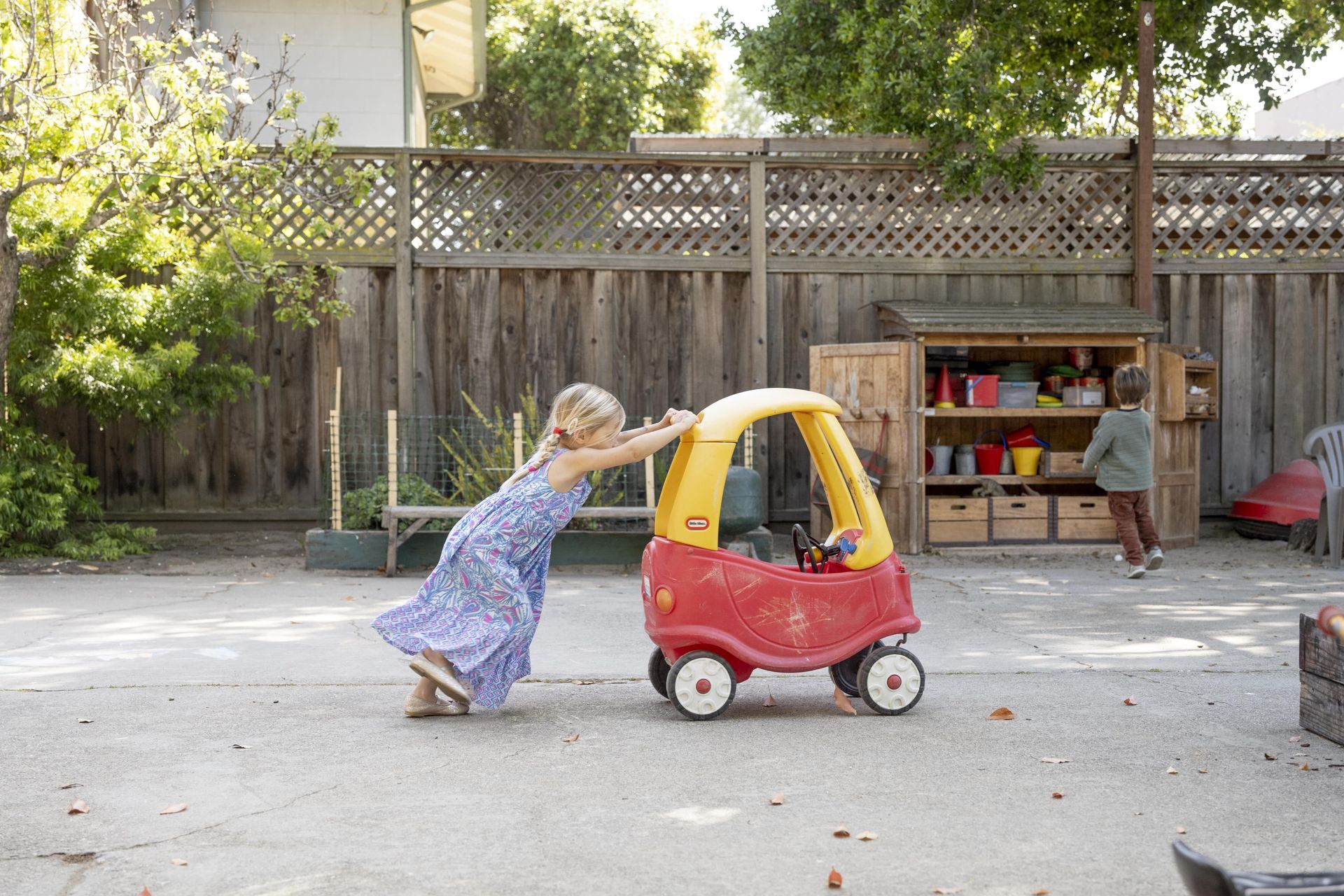
For children six and under, Montessori emphasizes learning through play with real materials. We use porcelain plates for snack, real knives for cutting food, and fabric mops for cleaning up spills, and children are responsible for all of those self-care activities. The classroom is the child’s world, and children in Montessori classes learn at their own, individual pace and according to their own choice of activities from dozens of possibilities. They are not required to sit and listen to a teacher talk to them, or a peer dictate what they play, or even to do anything. They are engaged in individual or group activities of their own, with materials or thoughts that have been introduced by a teacher who knows what each child is ready to do at the precise moment they are ready for it. Learning is an exciting process of discovery, leading to concentration, motivation, self-discipline, and a love of learning.
-
How does Montessori teach reading, counting, and other academic skills?
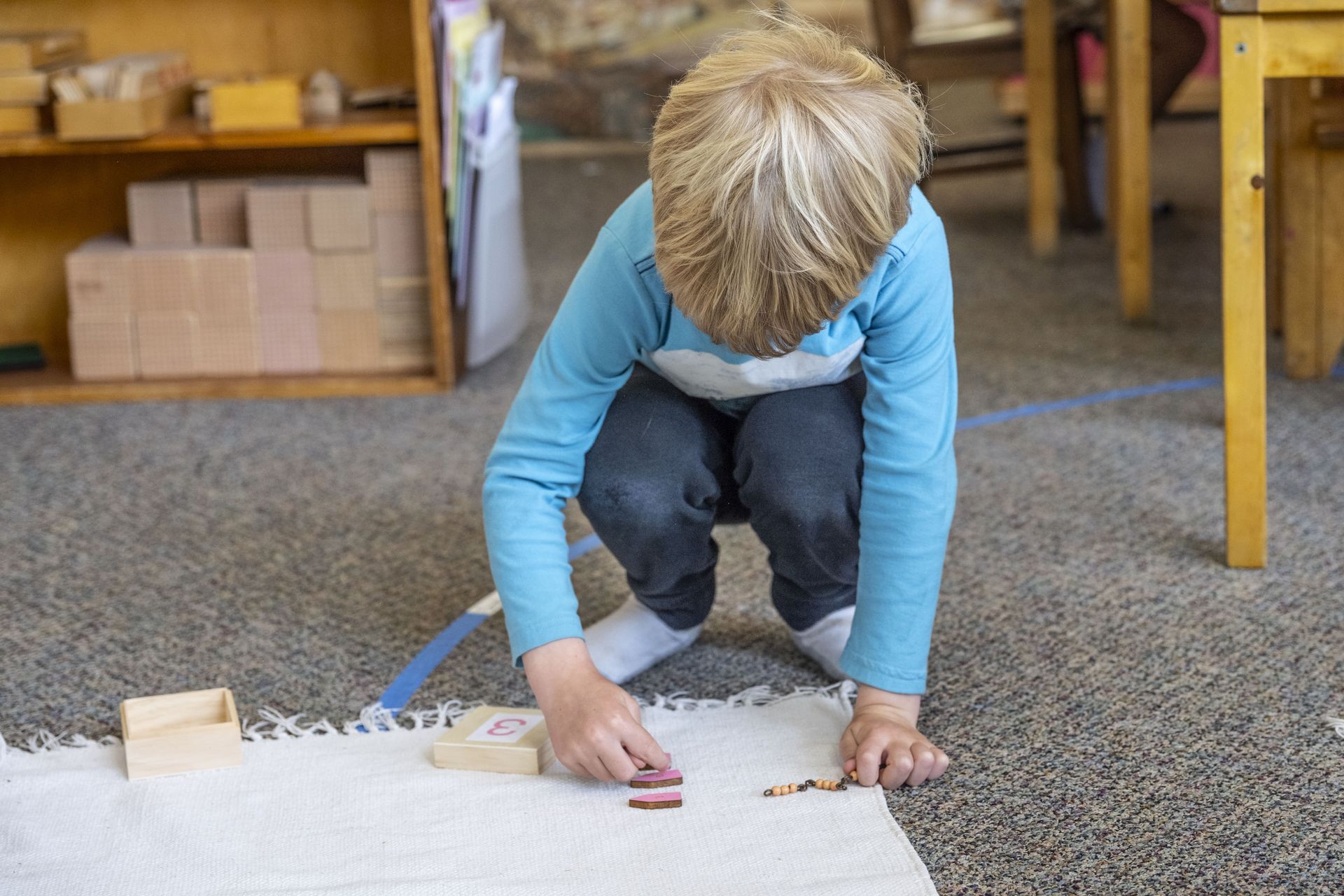
The Montessori classroom is organized into 5 areas, each of which builds and supports the others. The foundation for all Montessori education is practical life, the everyday skills needed to perform any activity. These include learning to dress and undress, pour and drink, take turns and apologize for hurt feelings. Practical life also includes all the organizational skills and fine motor control that underpin larger, longer projects. Then, children move on to honing their senses and sense of order: the sensorial area involves putting things in order from smallest block to largest block, loudest sound to softest sound, or sweetest smell to stinkiest smell. Once these subjects have been mastered, and children have confidence in their abilities, they move on to the academic skills: language, math, and science.
-
Why does Montessori have such a large range of children in a single classroom?
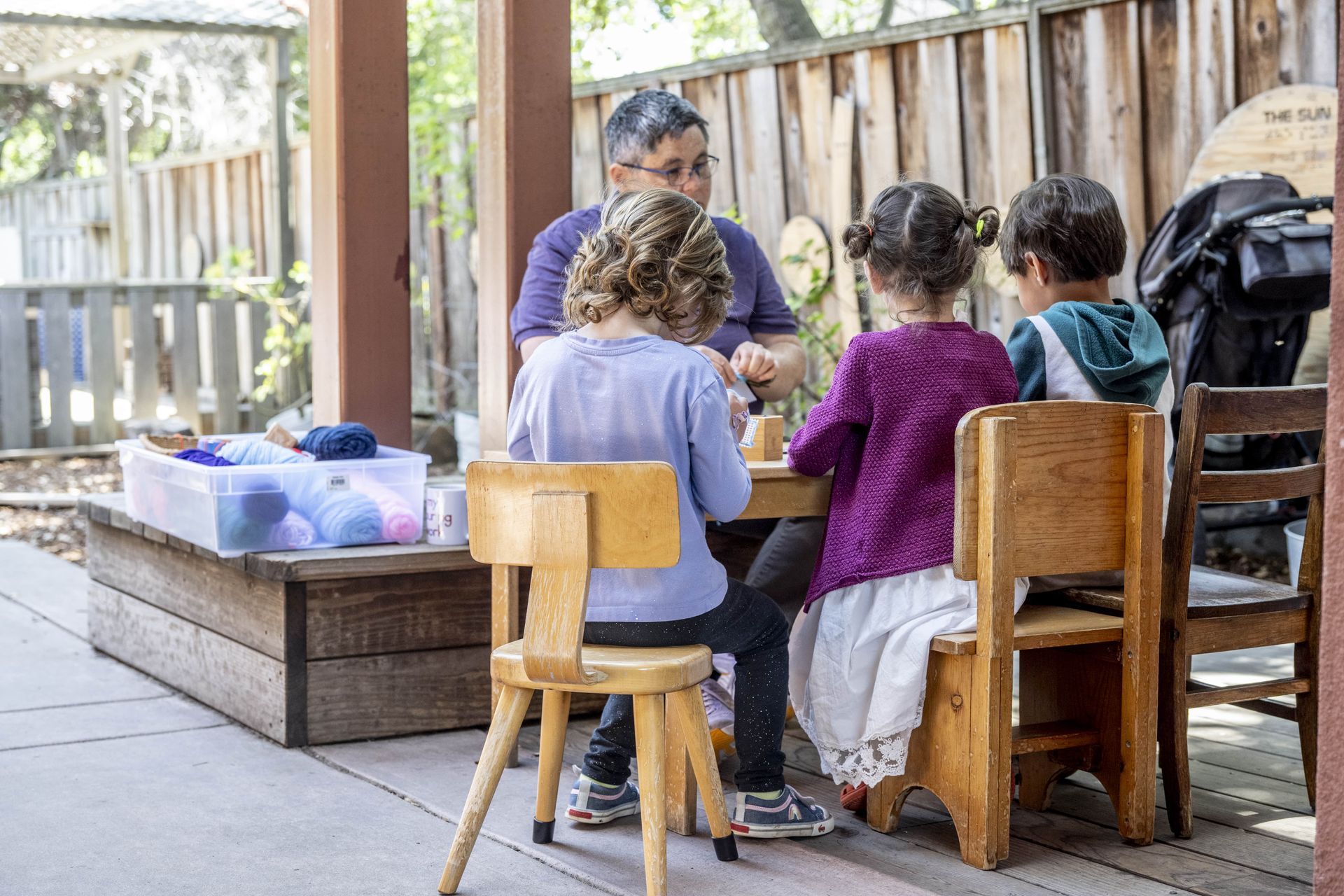
Multi-age classrooms afford us the luxury of adapting the curriculum to the individual child. Each child can work at his or her own pace while remaining in the community with their peers, allowing children to move ahead or to take a bit more time in any one subject as necessary. The multi-age format also encourages older children to be the leaders of the classroom community and teaches younger children how to follow.
-
Is Montessori good for children with learning disabilities? What about gifted children? What about average children?
Maria Montessori initially used materials designed for children with learning difficulties; her first materials were adapted from ones used by Édouard Séguin in the 19th century designed for children with various cognitive impairments. Later, Montessori realized that the same materials could be used by children with developmentally neurotypical brains, and even later still educators around the world discovered that Montessori is ideal for gifted children who often outstrip their own teachers in their desire to learn. At its best, Montessori is designed to help all children reach their fullest potential at their own unique pace. A classroom whose children have varying abilities is a community in which everyone learns from one another and everyone contributes. Through multi-age groupings and a diverse student body, Montessori allows each child to find their own pace without being “ahead” or “behind” of their peers, and without the complicated feelings that involves.
-
Why is Montessori so structured? How will my free-spirited, playful child cope?
Montessori classrooms and materials are guided by contextually appropriate behaviors; there is a “right way” to carry a chair, to roll a rug, to carry a work. Each material on the shelf has a series of guidelines for its use. These methods are entirely oriented around respect for the individual, for their peers, and for the classroom environment: we emphasize carrying a chair in a way that ensures no one will harm another person; we teach rolling a rug such that the next person to use it will be able to unfurl the rug easily; and we show children how to carry a work so that the pieces do not fall and break. This level of structure ensures each child participates in the maintenance and preservation of the environment, taking responsibility for their own classroom. Many of the materials are open-ended, and children are encouraged to explore and create within those boundaries.
-
Why is Montessori so chaotic? How will my routine-loving child manage?
While there are special rules to follow inside the classroom and in the yard, each individual child chooses their own path through their day and the environment. The daily routine does not vary and we are very careful to ensure that children learn the routine so they may understand the rhythm of their own days. The day begins with an inside work period; snack takes place mid-morning in the Toddler classroom and is freely available in the Primary classroom; there is outside play before lunch, and a nap or rest time after lunch. For those children who do not nap, there is another work time. Despite the amount of movement in the classroom, everyone is focused on their task and moving with purpose.
-
If children are free to choose their own work, how do you ensure that they receive a well-rounded education?
Montessori children are free to choose within limits, and have only as much freedom as they can handle with appropriate responsibility. The classroom teachers monitor individual children, ensure that children do not interfere with each other, and that each child is progressing at her appropriate pace in all subjects. Direct lessons and small group circles are given to make sure children are exposed to all the topics in the classroom, but if a child appears to avoid certain interest areas, teachers investigate, and alongside parents, find ways to invite children to explore outside the entire range of possible interests.
-
My child loves interacting with adults; how will they learn to make their own choices without help?
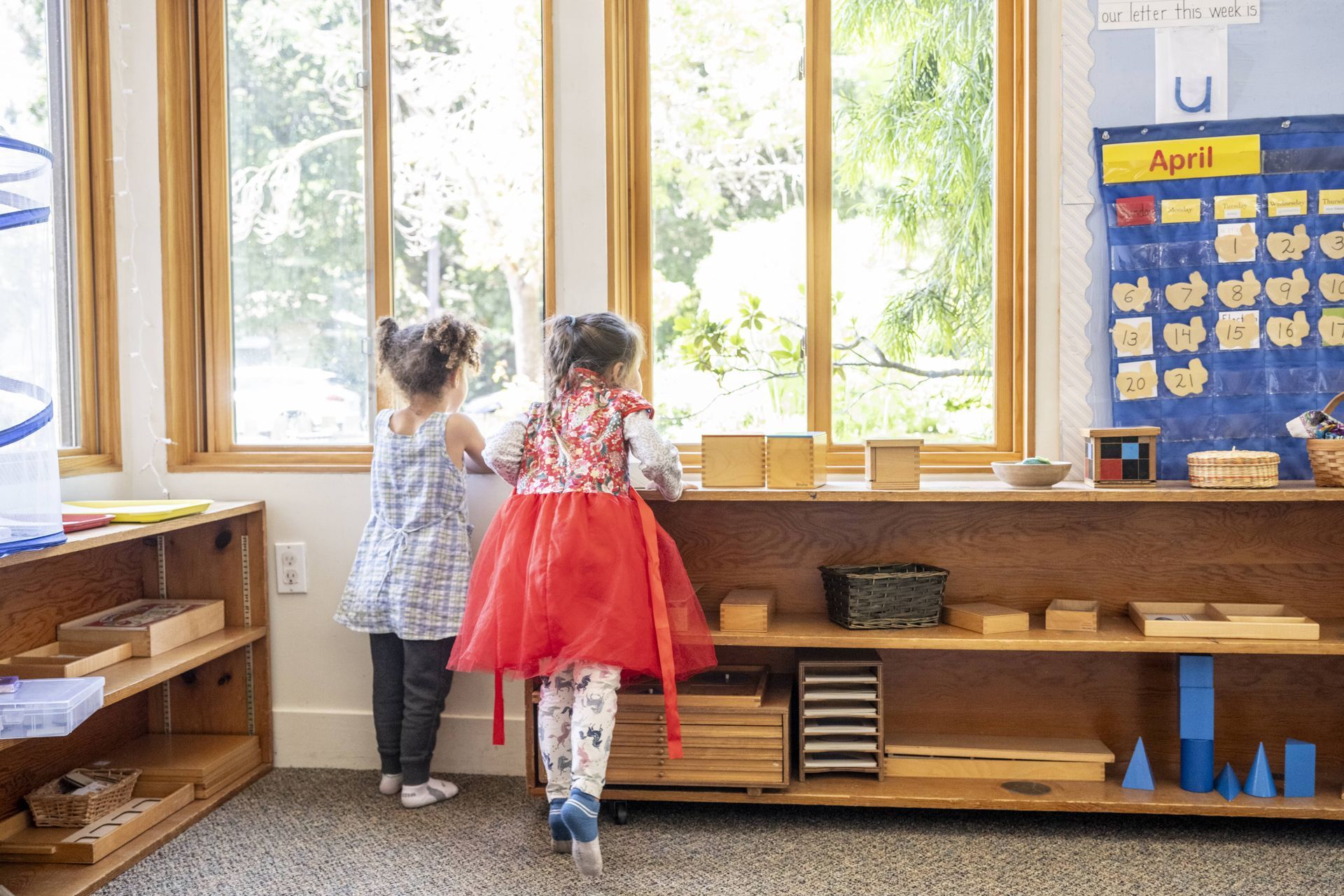
At a Montessori school, the teachers adapt to the child’s world. The different arrangement of a Montessori classroom mirrors the Montessori method's differences from traditional education. Rather than putting the teacher at the focal point of the class, with children dependent on her for information and activity, the classroom shows a literally child-centered approach, with appropriately sized chairs, tables, and toilets. Children work where they can spread out their materials, and the teacher moves to the children, giving lessons or resolving issues as they arise.
Before some children can feel confident in their decision-making, they may require a period of observation, adult support, and comfort. These children hold a hand while the teacher walks through the classroom, sit in a lap when the teacher sits down, and lean on adult support until they are ready to make their own choices. A teacher is always available to point out options in the classroom, offer suggestions, and provide a safe harbor.
-
Do I need to implement Montessori at home to support my child?
No, this is not necessary. At home, parents need to emotionally support their children, offer listening ears and hugging arms, and provide consistent love and admiration. Encouraging independence and providing limits at home create a calmer, more secure child, but we understand that the reality of being a parent does not always embrace the ideals we want to give to children. In our hectic, over-complicated lives, the beautiful bedroom and attractive shelves of toys often take a backseat to the loving, electronic gifts from grandparents and the untidiness of daily life.
-
How does Montessori deal with discipline or disputes?
Maria Montessori emphasized that a secure, competent, confident child is self-disciplined and does not require external discipline to be administered. This does not happen automatically or immediately: first, a child must feel secure, have their emotional, mental, and physical needs met. Children must have food when they are hungry; their peers supply this for them until they have the capacity to do it themselves. They should sleep when they are tired, and our classrooms provide quiet spaces to rest. And children must have appropriate challenges in their classroom to match their skills and occupy their attention. Once all these things have been accomplished, the child is ready to follow external rules and adapt to satisfying their own needs through the practical skills of living, fulfilling their role in the community with grace and courtesy, and developing their intellectual capabilities.
Once children are fully secure in their place in the classroom, they become extraordinarily generous, rarely selfish, and deeply empathetic to others. Disputes are then easy to solve through consistent validation of feelings, offering children words to use for resolution, and recognizing that everyone’s perspective is important to consider.